

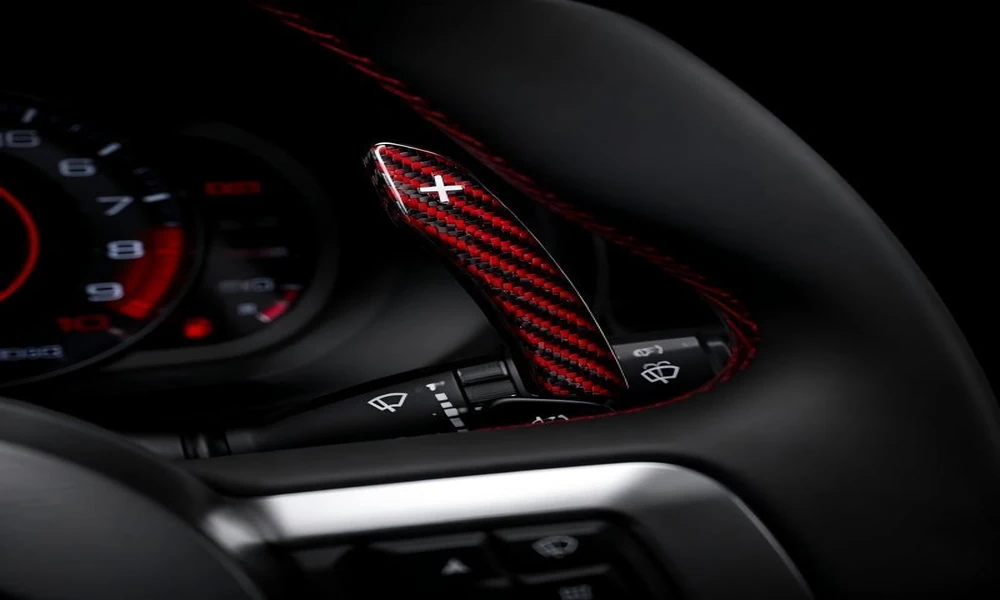
The photo was not lying. It was just taken once, in one light.
Every carbon fiber buyer has lived this moment: the part arrives, you open the box, and it looks… different. Flatter, maybe. Darker, or lighter, or less shimmery than the listing. You did not necessarily get scammed. You collided with one of the hardest-to-photograph surfaces in the car world, and understanding why will save your next purchase, and possibly your next review.
The Physics of the Problem
Carbon weave is a field of tiny cylindrical fiber bundles crossing at right angles. Cylinders reflect light directionally, so the fabric’s appearance depends entirely on three angles: where the light is, where the camera is, and where your eye is. Change any one and the weave pattern visibly shifts. A camera freezes one combination of the three and presents it as the truth. Your eyes never see that combination again. The material did not change between the listing and your driveway, the geometry did.
The Tricks Listings Use (Legally)
Most product photography is honest but optimized. Studio shots use hard, raking light that maximizes weave contrast, the shimmer you fell for. Wet-look gloss shots are often taken freshly polished, sometimes freshly sprayed. Outdoor hero shots are golden hour, when every surface on earth looks expensive. None of this is fraud; it is the part on its best day, in its best light, from its best angle. The carbon fiber color guide shows how finish families genuinely differ. Learning to read past lighting to the actual finish is the skill that matters.
The Tells of Real Quality in a Photo
You can extract real information from listing photos if you know where to look. Ignore the shimmer and study the reflections instead: a long, straight highlight bending smoothly over the weave means flat, well-cured laminate; a wobbly highlight means waves in the layup. Look at the edges of the part, where photo staging is weakest. Clean trimming and uniform resin coverage are impossible to fake at scale. And look for the back side. Sellers who photograph the back of the part are telling you something. Sellers who never do are also telling you something.
Weave Size, the Silent Variable
Photos hide scale cruelly. A tight 2×2 twill and a large, loose weave photograph almost identically at thumbnail size and look completely different on a car. Small weave reads calm and OEM, large weave reads busy and aggressive. Any listing that does not state the weave pattern and approximate bundle size is withholding the spec that most changes how the part reads in person. Ask. Good sellers answer instantly, with numbers. And if the listing offers tinted or hybrid variants, the ways to change carbon fiber color guide will tell you what those options actually are before the photos try to show you.
The Screen Makes It Worse
One more layer of the problem lives between the photo and your eyes: your screen. Displays differ wildly in brightness, contrast, and color temperature, and a deep gloss weave is exactly the kind of dark, high-contrast content that screens render least consistently. The part that looked jet black on your phone may read charcoal on your laptop. Neither was right. This is why serious sellers offer return windows and why serious buyers calibrate expectations, not monitors.
Ask for the Video
The single best weapon against photo physics is embarrassingly simple: ask for a video. A five-second clip of someone tilting the part under light shows you the shimmer behavior, the finish depth, and the weave texture all at once. The three things still photos distort most. Serious sellers accommodate this instantly; many now include video in listings by default. A seller unwilling to show the part moving in real light is answering a question you did not ask. Believe that answer.
How to Actually Buy
- Demand multiple photos in different light: studio, daylight, shade. One-light listings are one-truth listings.
- Ask for the weave spec and the finish: gloss, matte, or satin, in words, not impressions.
- Look for customer photos in reviews. Uncontrolled light is the most honest light there is.
- Check the edges and the back in photos, where quality cannot hide.
- Remember the physics: your part will shift appearance with light all day. That is not a defect. That is the material being itself.
The Pleasant Surprise Clause
Here is the twist that keeps the hobby fun: real carbon, in real light, often beats its photos. The shimmer that a camera flattens into a single impression is alive in person, shifting as you walk around the car, doing things no listing ever promised. Buyers who understand the photography problem stop being disappointed by boxes. And start being pleasantly surprised by driveways. That is the correct order of things.
Judge the seller by their honesty about light, judge the part by its edges and its spec sheet, and judge the final look in your own driveway, in your own weather. The photos were never the product. The behavior of light on real fiber. That is the product, and no camera has spoiled it yet.