

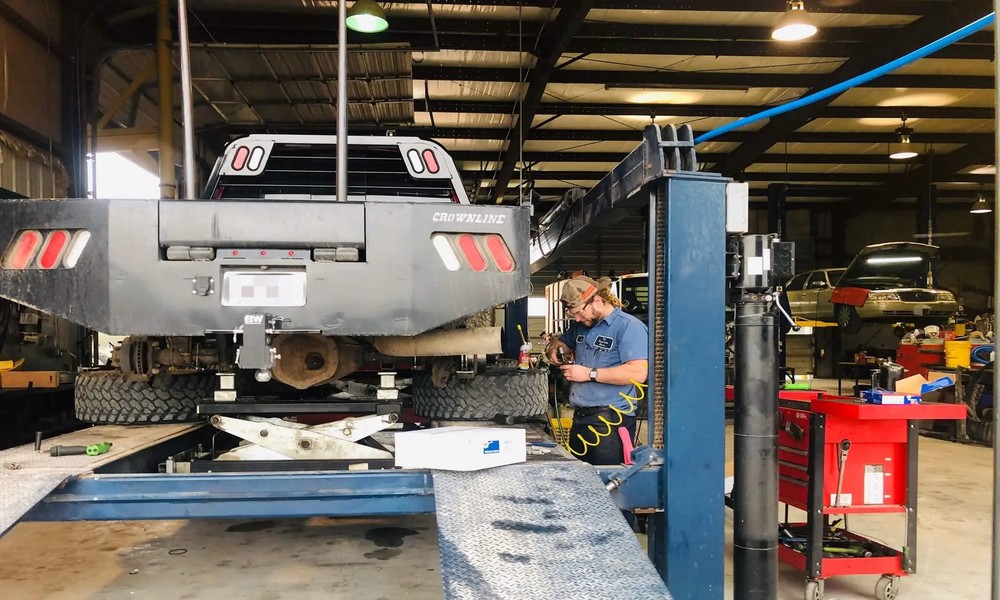
A work truck is not just a vehicle – it is a tool that earns money every day it stays on the road. Whether you use yours for hauling materials, towing equipment, running service calls, or managing deliveries, downtime is not an inconvenience. It is a direct hit to your income.
The good news is that the majority of work truck breakdowns are preventable. The trucks that rack up 300,000 or 400,000 miles without major failures are not running on luck – they are running on consistent, disciplined maintenance habits applied week after week, year after year. Here are six of the most impactful ones.
1. Follow Oil Change Intervals Without Exception
Engine oil is the first line of defense against wear in any internal combustion engine, and it is doubly important in diesel-powered work trucks where operating pressures and temperatures are significantly higher than in passenger vehicles. Diesel engines accumulate soot, acids, and combustion byproducts in their oil at a faster rate, which means the protective qualities of the oil degrade more quickly and need to be refreshed on schedule.
The mistake many work truck owners make is treating oil change intervals as suggestions. Extending an oil change by a few thousand miles occasionally might seem harmless, but oil that has broken down is not just less effective – it actively allows metal-to-metal contact in the engine’s bearing surfaces, which accelerates wear in ways that compound over time.
Practical habits to build:
- Know your truck’s OEM-specified oil change interval and the correct oil specification – these vary by engine make and model year
- Track mileage between changes rather than relying on memory – a simple logbook in the truck or a fleet maintenance app keeps this honest
- Check oil level and condition on the dipstick once a week, not just at service time – a sudden drop in level or a milky appearance signals a problem that needs immediate attention
- Use the correct API-rated oil – for modern diesel engines, CK-4 or FA-4 specification oils are the current standard, and using the wrong spec can void warranties and compromise protection
2. Protect Your Fuel System From Contamination
Fuel quality has a direct and significant impact on how long a diesel engine lasts and how reliably it runs. This is especially true for modern common rail diesel systems, where fuel injectors operate at pressures exceeding 30,000 PSI and tolerances measured in microns. Contaminated fuel – whether from water infiltration, microbial growth, or particulate matter – causes injector wear and failure at a rate that can turn a well-maintained engine into an expensive rebuild candidate.
Water contamination is the most common fuel system threat. Diesel fuel is hygroscopic, meaning it absorbs moisture from the atmosphere, and condensation in fuel tanks – particularly in trucks that sit unused for extended periods or experience large temperature swings – introduces water that can corrode injectors, damage fuel pumps, and encourage microbial growth in stored fuel.
Fuel system protection measures that work truck owners should build into their routine include replacing fuel filters at or before the manufacturer’s recommended interval, draining the water separator bowl regularly (most commercial trucks have a manual drain and a warning light – do not wait for the light), and using fuel additives appropriate for your climate and storage situation. For a comprehensive breakdown of how contamination enters diesel fuel systems and what it does to engine components over time, Heavy Duty Journal’s guide to preventing diesel fuel contamination covers the full picture from storage tank management through injector-level damage – well worth a read for anyone running diesel equipment.
3. Never Ignore the Cooling System
Overheating is one of the fastest ways to destroy a diesel engine. A single severe overheating event can warp cylinder heads, blow head gaskets, crack the engine block, or seize the turbocharger – failures that routinely cost $10,000 to $30,000 or more to repair. The cooling system is what stands between your engine and those outcomes, and it is one of the most neglected areas of work truck maintenance.
Cooling system tasks that get deferred too often:
- Coolant flush and replacement – coolant has a finite service life; its corrosion inhibitors deplete over time, and degraded coolant causes internal corrosion of the engine block, cylinder liners, water pump, and radiator
- Coolant concentration testing – the freeze point and boiling point protection of your coolant should be checked with test strips or a refractometer, not assumed
- Supplemental coolant additive (SCA) maintenance – most heavy-duty diesel engines require SCAs to protect cylinder liners from cavitation erosion; these deplete independently of the coolant and need to be monitored
- Radiator cleaning – bugs, road debris, and dust clog radiator fins and intercooler cores, reducing heat dissipation capacity; a seasonal cleaning with a low-pressure water rinse maintains airflow
- Hose and clamp inspection – cooling system hoses should be checked for softness, swelling, or cracking at every oil change; a burst hose will overheat the engine within minutes
If your temperature gauge climbs above its normal operating range under any condition, that is not a warning to note and keep driving – it is a signal to pull over, shut down, and investigate before irreversible damage occurs.
4. Keep Your Emissions Systems Clean and Functional
Modern diesel trucks equipped with emissions control systems – including the diesel particulate filter (DPF), selective catalytic reduction (SCR) system, diesel oxidation catalyst (DOC), and exhaust gas recirculation (EGR) valve – require active maintenance to function correctly. Neglecting these systems does not just risk an emissions violation. It degrades engine performance, increases fuel consumption, triggers power-limiting derate modes, and can result in repair bills that dwarf the cost of proper upkeep.
The DPF is the component that requires the most active management. It traps soot from the exhaust stream and must periodically regenerate – burning off accumulated soot through high-temperature exhaust conditions. Short-trip driving, excessive idling, and low-load operation can all prevent the passive regeneration process from completing, resulting in soot buildup that eventually requires active regeneration or physical DPF cleaning.
Signs that emissions systems need attention:
- Frequent active regeneration cycles – if the truck is initiating DPF regeneration more often than normal, it indicates an underlying issue with passive regen conditions or excessive soot loading
- Reduced power or engine derate warnings – the ECU limits engine output to protect emissions components when system faults are detected
- Increased fuel consumption without a change in load or route – a restricted DPF raises exhaust backpressure, forcing the engine to work harder
- Check engine lights related to NOx efficiency or DEF quality – SCR system faults are frequently caused by DEF (diesel exhaust fluid) contamination or low-quality DEF that does not meet ISO 22241 standards
Emissions system diagnosis is a specialized area that benefits from a structured approach. Heavy Duty Journal’s emission system diagnostics guide covers DPF, SCR, and EGR system testing in detail – including how to use scan tools to separate electrical faults from mechanical failures, which is where most shop time gets wasted on these systems.
5. Inspect and Maintain Your Brakes on a Schedule
Work trucks operate under braking loads that passenger vehicles never approach – loaded hauls down grades, frequent stops in urban delivery routes, towing heavy equipment on hilly terrain. Brake components wear faster under these conditions, and the consequences of brake failure in a loaded truck are categorically more serious than in a passenger car.
Brake maintenance for work trucks should include:
- Lining thickness measurement at every oil change – do not guess; use a gauge and compare against the manufacturer’s minimum specification
- Rotor inspection for heat cracks, scoring, and thickness – rotors that are at or below the minimum discard thickness are a liability, not a cost saving
- Brake adjustment on vehicles with drum brakes – automatic slack adjusters can fail or fall out of adjustment; manual verification catches this before it becomes a brake efficiency problem
- Air system inspection on trucks with air brakes – check for audible leaks, verify that the low-pressure warning activates correctly, and confirm that the compressor builds pressure within the normal time range
One brake inspection habit that pays dividends is checking the wear difference between the inner and outer pads on disc brake equipped axles. Significantly uneven wear between inner and outer pads indicates a seized caliper – a common failure mode on trucks operating in wet or corrosive environments that is inexpensive to fix when caught early and expensive when ignored.
6. Address Small Problems Before They Become Big Ones
This is the maintenance habit that is hardest to maintain and most valuable when you do. Work trucks generate a constant stream of minor issues – a small fluid weep, a new vibration at highway speed, an unusual smell after a hard day’s work, an intermittent warning light. The temptation in a busy operation is to note the symptom and keep running until it gets worse or until the next scheduled service.
That approach consistently turns $200 repairs into $2,000 repairs. A weeping rear main seal costs a few hundred dollars to address proactively. Left until it becomes an active leak, it contaminates the clutch or rear brakes on its way to requiring the same repair – plus the secondary damage costs. A small coolant leak that shows up as a damp hose clamp costs an hour’s labor to fix. The same leak ignored until the truck overheats costs far more.
Practical systems that help catch small issues early:
- A daily walk-around that includes a visual check under the truck for fluid spots – five minutes before departure catches leaks before they become failures
- A driver defect reporting system – whether it is a paper form, a shared note on a phone, or fleet management software, drivers need a clear channel to report symptoms without it feeling like they are getting the truck pulled from service unnecessarily
- A dedicated maintenance log for each vehicle – tracking every repair, fluid change, and inspection creates a history that makes patterns visible and informs better decisions about when to repair versus replace aging components
The Long-Term Payoff
None of these six habits are complicated. They do not require expensive equipment or specialized skills. What they require is consistency – showing up for the truck the same way the truck shows up for the job. Work trucks that are maintained this way regularly outlast their depreciation schedules by years, hold better resale value, and generate far lower total cost of ownership than trucks that are run until something breaks.
In a business where the truck is the business, that discipline is not just good practice. It is a competitive advantage.
About the Author: This article was contributed by the editorial team at Heavy Duty Journal, a free digital trade publication covering diesel maintenance, fleet management, and commercial trucking for technicians and owner-operators across North America.